← Return to Winners Showcase
Edinam Denoo

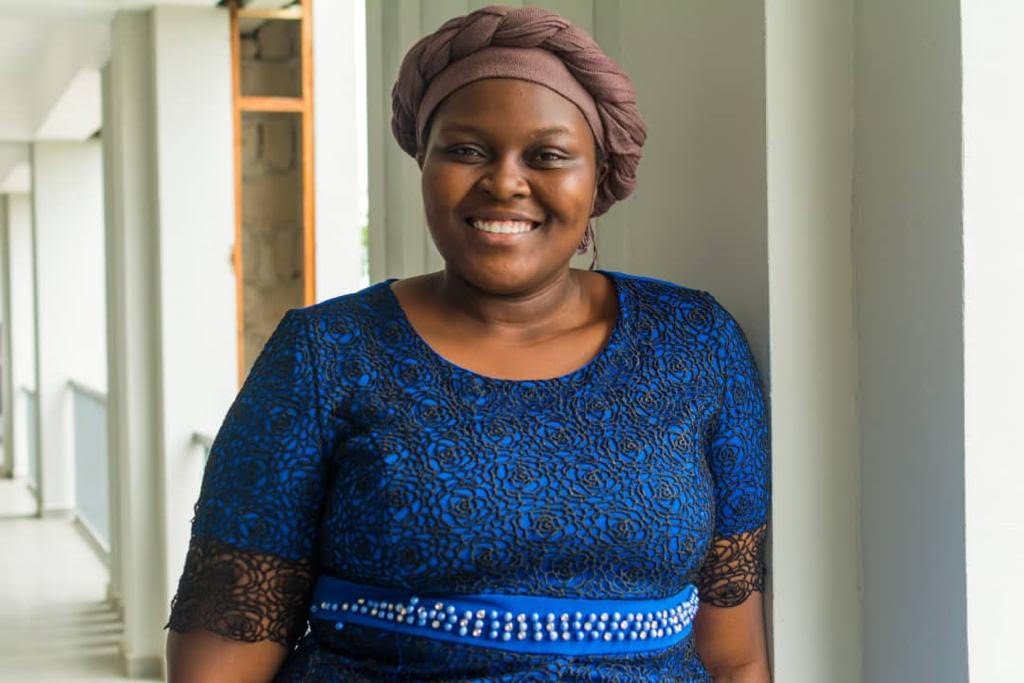
Photograph courtesy of the author

Continental Prize • $1,000 Award + Video Adaptation

Edinam Denoo

“Bonu Bonu Kpoo”

Complete Two-Sided Suite • Ghana • In Partnership with Grayling & Wraith

“Receiving the Arole Grayling Wraith Prize is a profound and humbling milestone. I hope these poems carry a fracture of the rhythm, form and truth Alhaji Arole Agarawu gave his craft. I am deeply grateful to the board of trustees, the guest Judge Matthew Shenoda, and the foundation for this honor and holding this space for the Black lyric.”— Edinam Denoo
SIDE ONE

Esiae nye aŋe si tsɔ ɖi yɔ ŋutilã me la ƒe ŋutinya

(“This is a story about a shovel filling the body with dust”)

Side One • Poem 1

1. MEMO//REFERENDUM

This onslaught was anointed. Whether by God or an-other,
we cannot tell. In graphic times, God falls out of the body;
punctuated by darkness. The tally shows a child beheaded
by the father, a daughter, burnt into an unacceptable
offering. Two breasts, a womb and a nine-week-old
baby wrapped in a polythene bag, as if to shield
them from prying eyes. Those that did not meet the
knife, are plagued by papery beings in the image
of God, hunting for flesh.

I want to talk about the man who keeps drafting
bills antagonizing queer people, while women
die preventable deaths in his constituency.
Or the pastor who first faced the
consequences of this bill, but insists on not
learning the lesson if God is not teaching it.
To talk about it
there must first be light to fell the darkness.

A call to stir the hunger. A response to quell it.
What is punctuating my silence, is the same thing
mutilating freedom into obedience.
Which is to say: the weapon of oppression is wearing
a feathered war crown while we write poems with
blunt edges.

REFERENDUM

Your vote is your voice

Can any word that comes out of a toothless mouth, be wisdom?

Yes
No
Side One • Poem 2

2. WHEN THE RAINS CAME TO ACCRA

Q. Section A

Which part of Accra has the worst flooding experience when it rains?
The gays.

Q. Section B

Which erogenous zone of the body when stimulated gets wet easily?
Accra.

The pope calls for peace but Accra is sinking. The memory that floods the city, is water walking back to where it once sat. A pastor calls to God and asks for an umbrella. He expels a small animal of blue ink and papery flesh out of his womb instead. A motorcyclist in his haste to get home to his pregnant wife, is being carried by the water to a better paradise. A store is caved in. The electric poles are wondering if now is a good time to drink water. If it could just get itself a little loose then….

The president calls for regulation: services, bodies, other. Afi du ke, ke mevona le efe nkume o, which is to say, pass the mortar and watch us build cages of suspicion. Cattles are being swept away. Houses are submerged. The drainage systems are asking to breathe; hence they send water away. But who needs a restructure when hell is already full? Let us hunt ourselves for the trophy of freedom.

RxMedical Prescription

Patient Name: Gbonu Kpoo

Age: 16

Address: 2nd Street, Property of this Country

Date: In this lifetime

Rx: Patriotism
Sever neural pathways in the brain prefrontal cortex to align patient with nation morals.

By morning, there will be a hole
where…
where…
where [         ] should have been.
There is a forced forgetfulness here.
I want to talk about it but
a hole appears.

Side One • Poem 3

3. NO LIGHT TO FELL OUR DARKNESS

This is a continuous war. Wherever the pendulum swings, people like us are
buried. dug. reburied. dug. and reburied. I have seen a body dog-eared by
sadness; the way fire licks everything it doesn’t understand. We are
hiding in this room, watching the city become allergic to itself.

You will kiss my skin & die there. You will moan
my name & die there. You will part my lips,
look for a mercy your god never gave
you & still, die there. We are dream—
ing of a future worse
than the past. Let
us play twenty-one
questions while
the doors of our heart close to hope: What have they
hollowed out of us? What are we filling it with? How do

we stop the darkness from entering our eyes and clogging
our lungs? Where do we go to drink light and cage
birds of joy in our chest? Are you still there?
Or have you chosen the privilege to walk away?

Side One • Poem 4

4. SEN-WA DE-DEN-DE

after Manthipe Moila, after Zachary Schomburg

1. Where are you?

Outside this body,

swimming into the call of my mother.

I once saw a crow swallow a song

in a room full of fear.

Sen-wa de-den-de

sen-wa de-den-de

sen-wa__

2. Do you want to talk about what happened?

There are roads and they are under water. There crows with wings wet with water. There are graves spitting out water. The land they sold to you is under water. The rent in the estate, at the exorbitant price is under water. There is a politician’s mouth we are trapped in, also under water. There is water at the edge of our tongues, in the music pouring into our bodies. We are wet with fear. Our lungs, our lands, our bodies, our life, all under water.

3. What do you think is the problem?

The call of my mother

asking what I will eat

while the world is coming to

an end.

Sen-wa de-den-de

sen-wa de-den-de

sen-wa_

4. Do you think you can survive?

This is not a question.

Side One • Poem 5

5. THE QUESTIONS I ASK WHILE EVERYTHING IS DYING

The defenders of God are set loose into the city.
The grief in this country is dog-eared with death.
We are so beautiful tonight we could die. Here.
The thing about beauty and its twisting:
A bullet could pass through our body like music,
and close a door. A bullet could pass through
the door and stop the music. A bullet could drown
in the music and open a door.
Duafe nkyinkyim, bi nka bi, gye Nyame.
I walk backwards into a wound that reminds me that
except God, we do not bite one another.
In walking backwards I know,
the road forward is behind.
There is a time loop for when everything dies. All the bodies
drowning in fear, are also drowning. A hand cups
a face. The city is alive. The defenders of God are
set loose into the city. 6.7 million live in
extreme poverty. Which is to say, we are dead. We
have always been dead. While dying, we are
hunting each other for God. For sports.

on entrance into the body,

I remember my mother’s prayer: Sankofa dwennimmen.

on exiting the body, my father’s: Odo nnyew fie kwan.

The road behind is not forward. The road behind,
is us behind.
Now, where do we go from here?

SIDE TWO

Esia nye ame kuku aɖe si va zu abɔ ƒe ŋutinya

(“This is the story of a corpse becoming a garden”)

Side Two • Poem 1

1. THE ENDING

We are holding each other at the end. Rinsing this city
out of a bloodbath. Singing this city into a cathedral of
beauty. We lay this city to rest. We build a new one.
For the dead. We write sonnets with blood,
and eulogies with flowers. For the living. We bring hope
smothered in honey.

emarf raw eht fo tuo klaw ew:

semarf noisivelet:

esidarap sseldnuow a otni:

torn placards bleeding, flower petals marching on, fixing bullet holes riddled against the will of our companions.

an anointed law wrangling miracles into blood, vinegar, wine staining the small corners of mercy in a body.

this blood here has teeth re-members itself into light, bursts into color, ends the drought of love.

Side Two • Poem 2

2. ON RE-MEMBERING THE BODY

after Romeo Oriogun, after Chris Abani

1 It is true. What survives the morning is a miracle. What breaks before the sunrise is mercy. 2 We have had our bodies profaned, kneaded into sin by hands who have made their 3 dwellings in perishable faith. 4 Bless the children of the night sharpening their hands on memory. Nenemae wòanɔ. Selah.

5 Bless the children of the womb, making incisions on papery flesh, giving birth to something old. Something new. Something blue. Something…true. 6 Nenemae wòanɔ. Selah. 7 Afevemegbo, gbodome wotsina. We are what we are rescuing, from the marrow of forgotten things.

8 Come. There is no forgetting. Just forgetting. 9 Everything beautiful here has died to hunger.

10 Come. 11 The desire here is holy to touch. Nenemae wòanɔ. Selah. 12 The dead we are naming is unto resurrection. Nenemae wòanɔ. Selah. [       ]. Selah. [     ].

13 Come. The table is set before us. 14 Brake the body. Put your mouth here & here & here. Bless. Eat. Remember.
Do this in remembrance for all we’ve lost.
For all that is yet to become.

15 Nenemae wòanɔ. Selah

Nenemae wòanɔ. Selah

Nenemae wòanɔ. 16 Selah

Side Two • Poem 3

3. LET THERE BE LIGHT

By the opening of our mouth the war has stopped. The language
we speak here is mixed. Joy is flayed and wearing the skin of sorrow.
The bird we have caged in the
the womb of our grief is showing us the way home.
The bullet wounds are singing:

I.   kɔkɔe. kɔkɔe. kɔkɔe.

The salt here turns into a gospel of light. The town we left is rousing
back to life. The rubbles are wobbling on one foot, settling on them
designated plots. The unmarked graves are giving up their dead. The
lost children are filing the streets, dancing the music of mercy. There
is a talking drum catching us on lost time.

II.   kɔkɔe. kɔkɔe. kɔkɔe.

The body here is borderless; free from sin and the yoke of God. The body
is porous unto absence. Drawing unto itself, moth, the flame, and the stories
hidden in the fold of our spine. Take it out. Let it thaw. The children are ready for
strong bones. Start the fire. Sit. Begin with the man born outside the image of God.
Then the prostitute, whose son never became the savior. Then the adulterer, stones,
an incense, five stones and two fistfuls of hair.

III.   kɔkɔe. kɔkɔe. kɔkɔe.

It does not matter how far the darkness has festered.

Let there be light.

Let there be light.

Neva me. Selah.

Title Poem • Side Two • Poem 4

4. BONU BONU KPOO

with words from Lucille Clifton

1. What would you call this?

the Breaking of ribs.

the Fracture of skull.

the Shattering of teeth.

the Splintering of collar.

Can you hear it? Music.

The falling apart of marrow on the tongue

crescend-o

The coming together of happiness.

2. What have you made here?

A body, half closedexpelling god in small clots
against prophesyrunning away…

fingers searching for an open field damp with the dead.

A body, half openwaiting for birds of joy
waiting for lightto land in the wound.

3. What has become of you?

Tutu gbovi, Tutu gbovi

We are FUCKING LUMINOUS.

Come. Come celebrate with us

arms linked, dancing in the fire

that tried to kill us

everyday but failed.

Come celebrate with us,

what tried to keep us

bonu bonu kpoo

& failed.

Side Two • Poem 5

5. I WANT TO. SING. A PSALM FOR. QUEER PEOPLE BUT...

You are there. Under the black law. Obscured. But there.
Dancing through the bullets. While fetching your body from the barrel.
See how beautiful it is. When a bullet tears through your cheeks. Merely missing your face.
Look. How the connective tissues. Part. In a solemn. Goodbye.
Look. The blood. Dancing in the light. Expels a prayer. Before. Hitting the ground.
Your body. Your body. Is. In the middle. Of an erasure.

What more can I say without handcuffing my language to offense?

I saw it. When you buried your body. Just yesterday. Now. A reoccurring ritual.
The grave. looked like a parenthesis. Housing a redacted text.
But. Ha! Yes. But!
You have dreamed. Ways. Of writing. Your body. Into life.
Like how its survival. Can. Be an entire poem.
A voice that answers. Its own prayer. Even while.
Damp in the earth. Exile isn’t always elsewhere.
Sometimes. It is the skin. The genitals. Or the lack thereof.
There is too much violence. Genuinely. I want. To say.
Fuck all these sons of bitches who won’t let you live!
Fuck! Them! All! What do they know about living?
Except killing and killing and killing? I hate them!
But. Ha! Yes. But!
I cannot. I am afraid. For little.
Mercies of living. I want to.
Sing you. A psalm.
But. I am. Afraid.

Glossary & Author Notes

  1. “Esiae nye aŋe si tsɔ ɖi yɔ ŋutilã me la ƒe ŋutinya”: translates to “This is a story about a shovel filling the body with dust,” a line taken from Adedayo Agarau’s opening poem, Wind, from his poetry collection, The Years of Blood.
  2. The Memo in the first poem is inspired by Chris Abani’s poem, Kimiko Hahn.
  3. When The Rains Came to Accra is taken from a headline in Daily Graphic, April 18, 1960.
  4. Afi du ke, ke mevona le efe nkume o: Ewe proverb: “The mouse that eats a raffia/jute/sisal bag, will always remember to eat others.”
  5. Senwa dedende: A call-and-response folksong among the Akans, in which a mother calls for the child to come and eat.
  6. Duafe, Nkyinkyim, Bi nka bi, Gye Nyame, Sankofa Dwennimmen, Odo Nnyew Fie Kwan: Adinkra symbols used to form sentences that read forward while their meaning constructs the poem backwards.
  7. There is a time loop for when everything dies: Play on Abdulrazaq Salihu’s poem, “Time Loop for the day I Die”.
  8. Esia nye ame kuku aɖe si va zu abɔ ƒe ŋutinya: “This is the story of a corpse becoming a garden.”
  9. Afevemegbo, gbodome wotsina: Ewe proverb: “A goat that belongs to two homes, is left to the outside.”
  10. Kɔkɔe: Ewe word for holy.
  11. Nenemae wòanɔ: Ewe for “so shall it be.”
  12. Neva me: Ewe for “let it come to pass.”
  13. Tutu gbovi, Tutu gbovi: Ewe lullaby: “my love, my love.”
  14. Bonu bonu kpoo: The ending words of the lullaby “Tutu gbovi”: “hush now.”